
THE HISTORY OF INK / HISTORY & CULTURE
A history written
in skin.
From ancient marks to modern studio art: how tattooing has changed, and why the human connection endures.
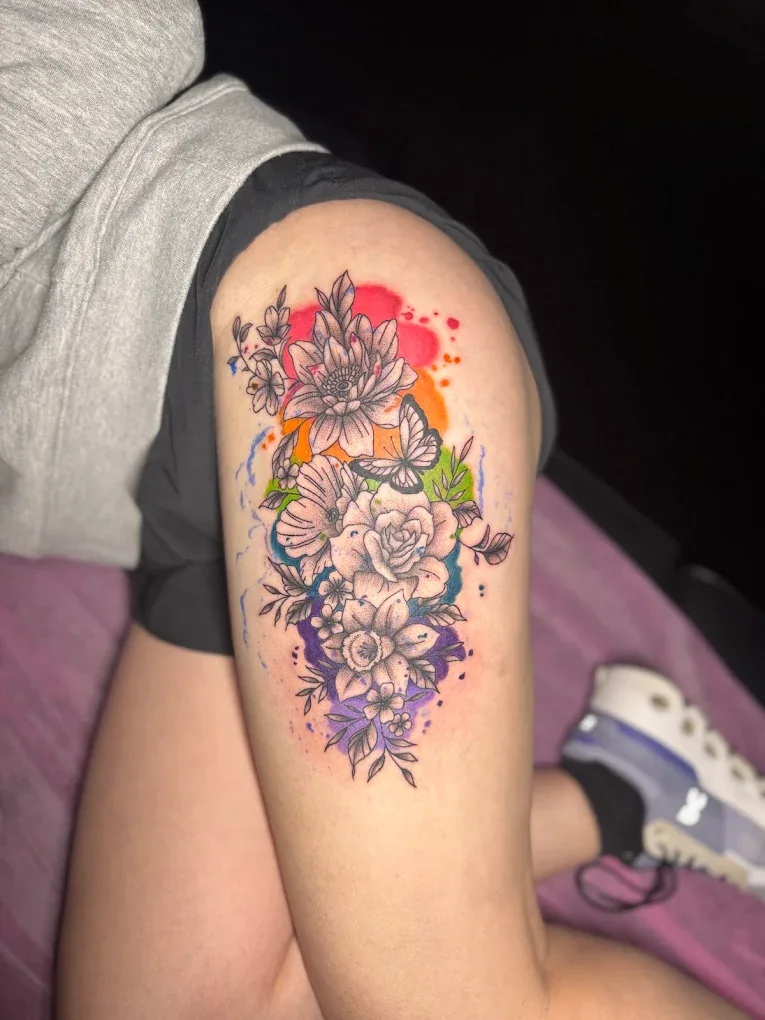
Some tattoos remember a person. Others celebrate a turning point, express an identity, or simply turn an artist’s drawing into something someone wants to carry. Those motivations feel contemporary, but marking the body has a much longer history than the modern tattoo shop.
There is no single known inventor or universally agreed birthplace of tattooing. The surviving record is incomplete, and traditions developed in different places with different meanings. The oldest evidence we can examine is not necessarily the first tattoo anyone made.
Early evidence: more than 5,000 years of ink
Ötzi, the naturally preserved person found in the Alps in 1991, lived roughly 5,300 years ago and bears tattoos. His preserved skin gives researchers unusually direct evidence of an ancient practice. What each mark meant remains a matter of interpretation; it would be misleading to present one explanation as certain. Read the Smithsonian’s account.
Ancient Egyptian evidence adds another part of the story. Research on the British Museum’s Gebelein mummies identified some of the earliest known figurative tattoos—recognizable images rather than only abstract marks. The museum documented those findings in its 2017–18 annual review. Discoveries like these show why tattoo history continues to be revised as research methods improve.
Distinct traditions, not one universal story
Across societies, tattoos have served purposes that include identity, belonging, spirituality, remembrance, and decoration. These meanings cannot be reduced to one timeline or treated as interchangeable patterns.
Māori tāmoko is an important example. Te Papa, New Zealand’s national museum, describes a practice with its own tools, visual language, and connections to identity. Its history includes disruption through colonisation as well as continuing cultural significance. It deserves to be understood on its own terms, not presented as a decorative style detached from the people who carry it. Explore Te Papa’s tāmoko history.
Learning where a design comes from is part of choosing thoughtfully. If a symbol belongs to a cultural or ceremonial tradition, investigate its meaning and speak with knowledgeable practitioners rather than assuming an online reference tells the whole story.
Changing tools expanded the possibilities
A significant milestone in machine tattooing came in 1891, when Samuel O’Reilly received a United States patent for an electrically powered tattooing machine. The patent describes the mechanism and ink reservoir. It marks a development in equipment, not the invention of tattooing itself. View O’Reilly’s original patent.
Equipment has continued to change, alongside artists’ approaches to drawing, shading, and composition. That does not make hand methods obsolete or culturally less sophisticated. Modern tattooing includes both evolving technology and continuing traditions; a machine alone does not determine the artistic value of the work.
Today: more visibility, more individual choice
Tattoos are a familiar part of contemporary American life. In a 2023 survey, Pew Research Center found that 32% of U.S. adults reported having a tattoo. That is a dated survey result, not a current count or a statistic specific to East Texas. Read the survey and methodology.
Today’s portfolios may include fine line, black and grey, expressive color, realism, traditional designs, or combinations shaped for an individual. Photographs make it easier to explore an artist’s work before arranging a conversation. But a reference photo is a starting point: placement, scale, and the wearer’s own preferences still matter.
The professional setting has changed too. Texas operates a studio licensing and inspection framework through the Department of State Health Services. When choosing a studio, ask questions about its practices and consult the state’s consumer resources. A polished website alone is not proof of a studio’s credentials. Texas DSHS information for clients.
Progress does not mean leaving the past behind
The story of tattooing is not a straight climb from “primitive” marks to “better” modern art. It is a history of different communities, technologies, restrictions, revivals, and personal choices. What has endured is the relationship between a mark, the person making it, and the person carrying it.
At Wyatt Tattoo LLC in Brownsboro, four artists work across fine line, black and grey, color, realism, traditional, and custom designs. Owner Riley Wyatt and the studio’s team bring a personal approach to a practice with a global history.